From Pilot to 1,000 Seats: What Determines Whether Nearshore Outsourcing in Honduras Truly Scales
- Mar 9
- 5 min read

Launching a pilot nearshore operation is relatively straightforward.
Scaling it to 1,000 seats is not.
Many global companies successfully establish an initial footprint in Latin America with 30 to 100 agents. Early performance looks strong. Recruitment moves quickly. Service levels are stable.
Then growth slows.
Hiring pipelines thin out. Leadership gaps appear. Infrastructure begins to strain. Expansion timelines extend beyond projections.
The difference between a successful pilot and a scalable enterprise operation lies in structural readiness.
For executives evaluating nearshore outsourcing in Honduras, the central question is not whether the country can support 50 seats. It is whether Honduras — and specifically business hubs like San Pedro Sula — can sustain multi-year expansion without operational breakdown.
Scaling is not about starting fast. It is about growing without friction.
The Scalability Gap: Why Growth Often Stalls After 100 Seats
In nearshore markets across Latin America, early-stage operations often perform well. The first wave of hiring draws from top-tier bilingual talent. Leadership attention is high. Executive oversight is constant.
But scaling exposes deeper structural requirements.
Growth tends to stall when companies encounter:
Limited bilingual labor reserves
Underdeveloped middle management layers
Facility constraints
Utility or connectivity limitations
Labor market competition spikes
In short, expansion reveals whether a destination supports enterprise-grade scaling or only pilot-level activity.
This is where evaluating nearshore outsourcing in Honduras must go beyond surface-level metrics.
Talent Depth in Honduras: Can the Labor Market Sustain 1,000 Seats?
Hiring 75 bilingual agents in San Pedro Sula is achievable.
Hiring 750 over 24 months requires labor market depth.
When assessing scalability in Honduras, companies must evaluate:
Annual bilingual graduate output
Urban workforce population size
English proficiency distribution
Competing employer concentration
Migration and demographic trends
Honduras has one of the youngest populations in Central America. San Pedro Sula functions as the country’s industrial and commercial center, attracting workforce mobility from across the region.
This concentration supports nearshore outsourcing in Honduras by creating a centralized labor pool rather than fragmented micro-markets.
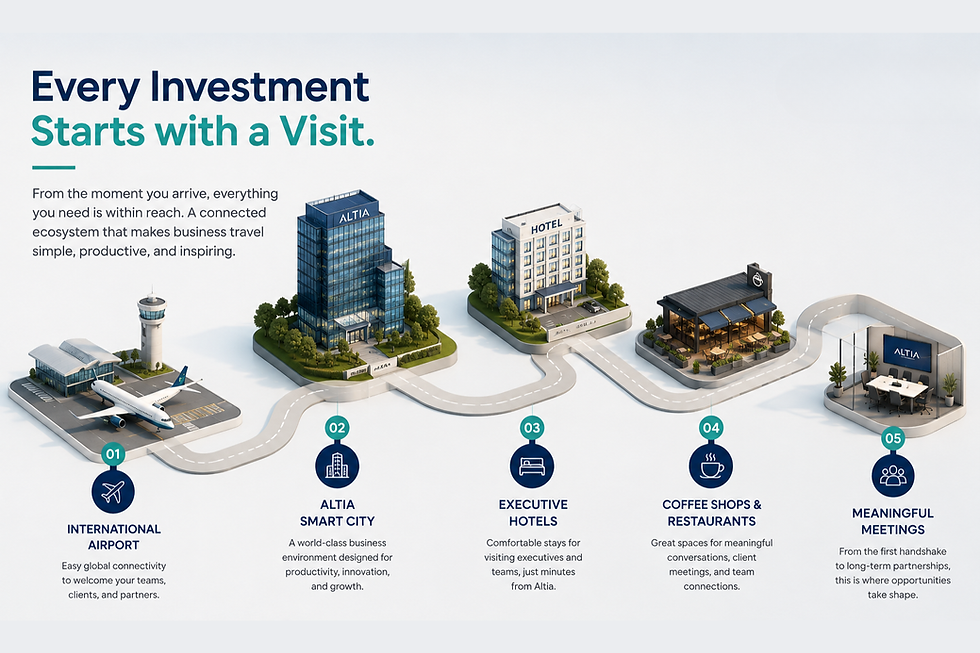
Within Altia Smart City, companies benefit from proximity to universities and structured workforce development programs. This improves access to talent pipelines over multiple hiring cycles.
Scalability depends not just on today’s hiring numbers, but on whether the labor market can sustain recruitment for five to ten years.
Leadership Capacity: The True Scaling Constraint
Entry-level hiring is visible.
Leadership capacity is decisive.
To move from 100 to 1,000 seats, companies need:
Experienced team leaders
Operations managers
Workforce planning specialists
Quality assurance supervisors
Training directors
In emerging nearshore destinations, the leadership layer often develops more slowly than the agent population.
Without capable middle management:
Coaching quality declines
Productivity fluctuates
Performance metrics become inconsistent
Client reporting weakens
Honduras has hosted BPO and contact center operations for over a decade. In San Pedro Sula, experienced supervisors and operations managers are no longer rare. That institutional maturity matters when scaling nearshore operations.
In established environments like Altia Smart City, companies tap into a workforce ecosystem where management talent already exists, rather than building it from scratch.
Sustainable scaling requires managerial depth — not just entry-level hiring volume.
Infrastructure Redundancy in San Pedro Sula: The Foundation of Enterprise Growth
A 50-seat operation can tolerate minor interruptions.
A 1,000-seat operation cannot.
Enterprise-scale nearshore outsourcing in Honduras depends on:
Reliable electrical infrastructure
Backup power redundancy
Scalable fiber connectivity
Secure physical facilities
Controlled campus environments
San Pedro Sula has invested heavily in commercial infrastructure due to its industrial significance in Honduras. Within purpose-built environments such as Altia Smart City, infrastructure was designed to support high-volume operations.
Redundant utilities and professionally managed facilities reduce the risk of operational disruption as companies expand.
Scalability requires continuity. Continuity requires infrastructure that grows with demand.
Ecosystem Concentration: Why Business Clustering Matters in Honduras
Scaling does not happen in isolation.
Large operations rely on surrounding business services, including:
Recruitment agencies
Workforce training providers
Transportation networks
Legal and compliance advisors
Technology integrators
In smaller Latin American markets, companies sometimes struggle because supporting services are scattered.
San Pedro Sula benefits from industry clustering. The presence of multiple BPO, technology, and service companies has created a concentrated knowledge base in Honduras.
Altia Smart City functions as a centralized business ecosystem rather than a single office building. That clustering effect accelerates problem-solving, recruitment, and operational learning.
For companies pursuing nearshore outsourcing in Honduras, ecosystem concentration reduces ramp-up friction as seat counts grow.
Labor Market Sustainability in Central America: The Long-Term View
Short-term hiring success does not guarantee long-term scalability.
Executives evaluating Honduras should examine:
Population growth rates
University enrollment trends
English language education initiatives
Wage growth patterns
Industry expansion forecasts
Honduras maintains demographic advantages relative to many aging global outsourcing markets. Its young workforce and expanding higher education footprint contribute to long-term labor sustainability.
San Pedro Sula’s continued development as a commercial hub strengthens its position as a nearshore outsourcing center in Central America.
Scalability depends on whether the labor market remains dynamic, not just competitive today.
Governance at Scale: The Complexity Multiplier
When operations grow beyond 500 seats, governance structures evolve.
Large-scale nearshore outsourcing in Honduras requires:
Advanced workforce analytics
Multi-team coordination systems
Robust compliance oversight
Consistent performance dashboards
Cross-border executive reporting
If local operational maturity is weak, governance demands increase dramatically.
Established environments like Altia Smart City help mitigate this risk by offering a structured, professional operating environment from the outset.
The more predictable the local ecosystem, the lower the escalation frequency as operations scale.
Why Nearshore Outsourcing in Honduras Is Positioned for Enterprise Growth
Not all nearshore markets in Latin America offer equal scalability.
Honduras combines several structural advantages:
Geographic proximity to the United States
Time zone alignment
Growing bilingual workforce
Competitive operating environment
Concentrated business hubs in San Pedro Sula
Within this national framework, Altia Smart City represents a consolidated operational environment where infrastructure, talent, and ecosystem maturity intersect.
This concentration reduces one of the primary risks executives fear: stalled growth between pilot and enterprise scale.
Key Questions for Executives Planning Expansion in Honduras
Before committing to aggressive seat growth in Honduras, decision-makers should evaluate:
Can San Pedro Sula sustain multi-year hiring without rapid wage inflation?
Is there a proven leadership pipeline for 500+ seats?
Does infrastructure support uninterrupted scaling?
Is the business ecosystem concentrated or fragmented?
Will Honduras remain competitive in five years?
These questions determine whether nearshore outsourcing in Honduras evolves from experimental to strategic.
Scaling Is a Structural Decision, Not a Tactical One
Launching a pilot tests feasibility.
Scaling tests structural readiness.
For companies exploring nearshore outsourcing in Honduras, success depends on more than cost comparisons or early hiring speed.
It depends on:
Talent depth
Leadership maturity
Infrastructure redundancy
Ecosystem concentration
Labor market sustainability
Honduras — particularly San Pedro Sula — has developed many of the structural foundations required for enterprise-grade scaling.
Within established environments such as Altia Smart City, companies operate inside a framework designed to support growth beyond 100 seats.
The strongest nearshore strategies are not those that launch quickly.
They are the ones that scale without strain.