AI Is Not Replacing Outsourcing. It’s Redesigning It.
For years, outsourcing strategies were built around one core idea: move work to lower-cost locations and scale teams efficiently. That model shaped global delivery for decades.
AI is now changing that model, but not in the way many expected.
The assumption was that automation would eliminate large portions of outsourced work. Instead, what we are seeing is a shift in how work is structured, executed, and managed. Outsourcing is not disappearing. It is becoming more sophisticated.
For companies evaluating nearshore outsourcing in Honduras, this evolution is less about disruption and more about repositioning. The role of human teams is changing, but their importance is not diminishing.
From Cost Efficiency to Capability Design
The most important shift is conceptual.
Outsourcing is no longer defined primarily by cost reduction. It is increasingly defined by how effectively work can be executed through a combination of human talent and AI systems.
Instead of asking how many people are needed, companies are now asking how workflows should be structured. AI handles repetitive and data-heavy tasks, while human teams focus on interpretation, decision-making, and interaction.
This changes the unit of value. It is no longer “cost per agent.” It is “output per team.”
That distinction matters when designing modern global delivery models.
What AI Can Handle — and What Still Requires People
AI is highly effective in environments where processes are structured and predictable. It can process large volumes of data, automate routine interactions, and identify patterns with speed and consistency.
However, there are clear limitations.
AI struggles with context, nuance, and situations that require judgment. It cannot fully replace human interaction in customer-facing roles, nor can it manage complex decision-making in dynamic environments.
As a result, outsourcing is not shrinking. It is being reorganized.
Human teams are shifting away from repetitive execution and toward higher-value functions such as exception handling, escalation management, and real-time problem solving.
The Emergence of AI-Augmented Teams
The most important change is not automation itself, but augmentation.
Teams are no longer working independently of systems. They are working alongside them.
In practice, this means that agents and analysts are:
Reviewing and validating AI-generated outputs
Managing exceptions that fall outside automated workflows
Interacting directly with customers when nuance is required
Ensuring consistency and quality across processes
This model increases efficiency without removing the human layer. In many cases, it raises expectations for skill levels rather than reducing headcount entirely.
For companies, this translates into smaller teams with higher productivity. For employees, it means roles that require more judgment, communication, and adaptability.
Why Nearshore Becomes More Important, Not Less
One of the less obvious effects of AI is that it increases the importance of coordination.
As workflows accelerate, the ability to respond in real time becomes critical. When systems process information instantly, delays in human response become more visible.
This is where nearshore outsourcing in Honduras plays a distinct role.
Time zone alignment allows teams to monitor, adjust, and intervene without delay. Instead of waiting for overnight cycles, teams can work in parallel with headquarters and client operations.
This improves not only speed, but also control. AI-driven processes require oversight, and that oversight is most effective when it happens in real time.
Honduras as an AI-Compatible Nearshore Market
AI adoption does not eliminate the need for talent. It changes the type of talent required.
Markets that combine language skills, digital familiarity, and operational experience are better positioned to adapt.
Honduras has been steadily developing these capabilities. Its bilingual workforce, growing higher education participation, and experience in BPO operations create a foundation for AI-integrated delivery.
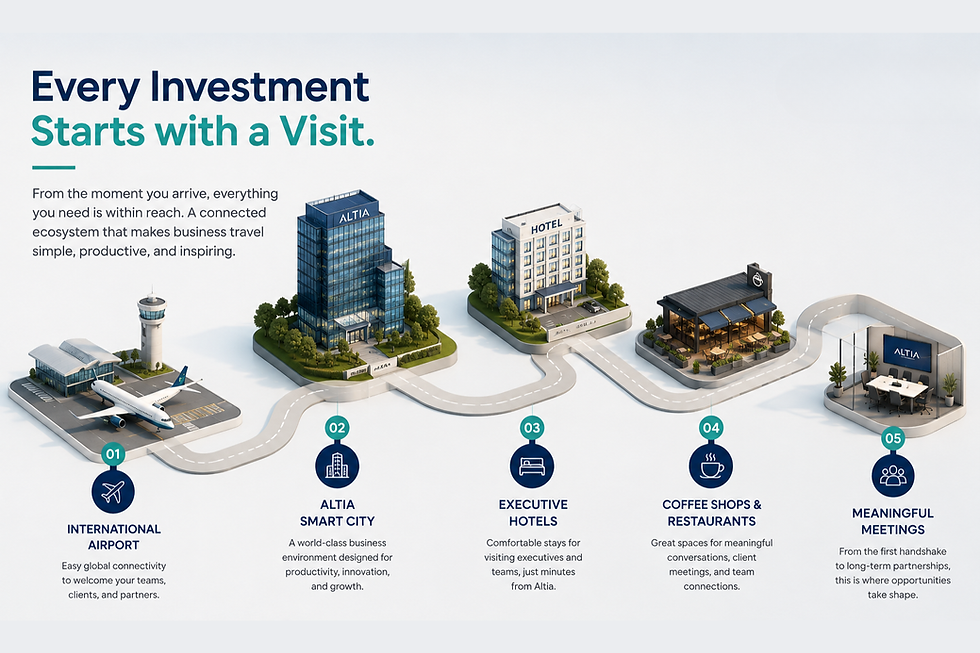
In cities like San Pedro Sula, the workforce is already accustomed to working within global service environments. Within structured ecosystems such as Altia Smart City, companies can integrate new technologies into operations without needing to build infrastructure from scratch.
This reduces friction during transition and allows organizations to focus on execution rather than setup.
A Shift in How Companies Evaluate Outsourcing
As AI becomes embedded in operations, decision-making criteria are evolving.
Previously, companies focused on:
Labor cost
Hiring speed
Workforce size
Now, the focus is shifting toward:
Ability to integrate AI into workflows
Workforce adaptability
Communication efficiency
Operational responsiveness
This reflects a broader change in priorities. Performance is no longer measured only by cost savings, but by how effectively teams can operate within increasingly dynamic systems.
Rethinking Scale in an AI-Driven Environment
AI changes the economics of scale.
Instead of increasing headcount to grow output, companies are increasing output per employee. This leads to more controlled expansion and reduces the need for rapid hiring cycles.
However, it also places greater importance on coordination. As systems become faster, teams must keep pace.
Nearshore environments support this by enabling closer alignment between teams and decision-makers. Communication becomes more immediate, and adjustments can be made without delay.
This creates a more responsive operating model.
Location Still Matters — Just in a Different Way
A common assumption is that AI makes geography irrelevant. In practice, it does the opposite.
As human roles shift toward interaction, oversight, and decision-making, proximity becomes more valuable. Communication, timing, and alignment all influence how effectively teams perform.
This is why nearshore outsourcing in Honduras remains strategically relevant.
It is not about replacing other regions. It is about complementing them by providing a layer that supports real-time execution and coordination.
The Emerging Structure of Global Delivery
The model taking shape is not a replacement of outsourcing, but an evolution of it.
AI handles repetitive and high-volume tasks.Human teams manage complexity and interaction.Different regions support different functions within the system.
Nearshore environments serve as the connective layer, linking automated processes with human oversight and client-facing execution.
This creates a more balanced and adaptable structure.