Honduras Ranks #2 in Latin America for English Proficiency — So Why Do Companies Still Choose Low-English Nearshore Markets, and How Could This Change the Perspective?

Latin America continues to be one of the most attractive nearshoring regions in the world.
Many companies still choose destinations where English proficiency is relatively low, and yet these markets remain central to nearshoring strategies across the region.
So the question naturally arises:
If English is so critical for global operations, why do companies continue to choose low-English-proficiency countries in Latin America as primary nearshore destinations?
For years, the answer has been clear: cost efficiency, large labor pools, and the ability to scale quickly.
Language, while important, was often treated as a challenge that could be solved later — through training, extra supervision, layered management, or more recently, technology.
But the market is evolving.
According to the EF English Proficiency Index (EF EPI) 2025, Honduras ranked #2 in Latin America for English proficiency, placing the country in the High Proficiency category.
This ranking introduces a new perspective for nearshoring in 2026:
What happens when a country offers competitive costs and strong English proficiency at the same time?
That is where Honduras — and Altia Smart City — begin to stand out.
Why Low-English Nearshore Markets Have Dominated for So Long
Countries like Mexico and Colombia have played a major role in shaping nearshoring in Latin America.
They continue to attract companies for very valid reasons:
Large labor pools
Established outsourcing ecosystems
Geographic proximity to the U.S.
Competitive operating costs
These strengths have made them reliable choices for companies focused on speed and scale.
However, English proficiency in these markets remains relatively low compared to other countries in the region. This does not make them poor nearshore destinations — but it does create a trade-off that many companies have learned to manage rather than eliminate.
The Hidden Trade-Off: Cost Efficiency vs. Communication Quality
When English proficiency is low, companies usually respond in one of two ways.
1. More Training and More Oversight
This often includes:
Longer onboarding periods
Ongoing language training
Additional supervisors and QA layers
Slower ramp-up times
While these costs may not appear immediately, they increase operational complexity over time.
2. More Technology to Fill the Gap
Many companies now rely on:
AI translation tools
Real-time transcription software
Automated quality monitoring
AI-assisted customer interactions
These tools can help — but they are not free.
They add:
Licensing and integration costs
Technology dependency
Risk in customer-facing conversations
In practice, companies in low-English environments often end up spending more to protect quality, either through people, technology, or both.
AI Is an Accelerator — Not a Replacement for Language
AI is transforming global operations, but it works best when teams already have a strong language foundation.
When English proficiency is weak, AI becomes a compensating mechanism rather than a productivity tool.
This increases:
Cost
Complexity
Operational risk
When English proficiency is strong, AI becomes what it was meant to be:an enhancer, not a necessity.
Honduras Changes the Equation
Honduras offers a different model.
With a strong English-speaking workforce and one of the most cost-effective nearshore cost structures in the region, Honduras removes the traditional trade-off between cost and quality.
Companies operating in Honduras:
Do not need to rely heavily on AI just to communicate
Do not need excessive management layers to correct misunderstandings
Can use AI strategically, not defensively
English is already there.

Cost Efficiency Without Compromising Quality
Most nearshore markets offer one of two advantages:
Low cost
Or strong English proficiency
Honduras offers both.
This allows companies to:
Control operating costs
Maintain communication quality
Scale faster with less friction
Reduce rework, errors, and turnover
This balance is especially valuable for:
BPO and customer experience operations
Shared services
IT and technical support
Finance and accounting
Sales and inside operations
The Talent Behind the Ranking
This ranking represents real people.
In Honduras, companies find:
Young, bilingual professionals
Strong work ethic and commitment
High adaptability to global teams
Cultural alignment with U.S. business practices
These qualities translate directly into better performance at scale.
At GK Global and Altia Smart City, this is visible every day.
Nearshoring in 2026: Fewer Trade-Offs, Better Decisions
Nearshoring is no longer just about finding the lowest cost.
Companies are now asking:
Where can we scale without losing quality?
Where can we reduce friction instead of managing it?
Where can technology enhance performance instead of filling gaps?
Honduras answers these questions with a balanced value proposition:
Competitive costs
Strong English proficiency
A growing and capable talent pool
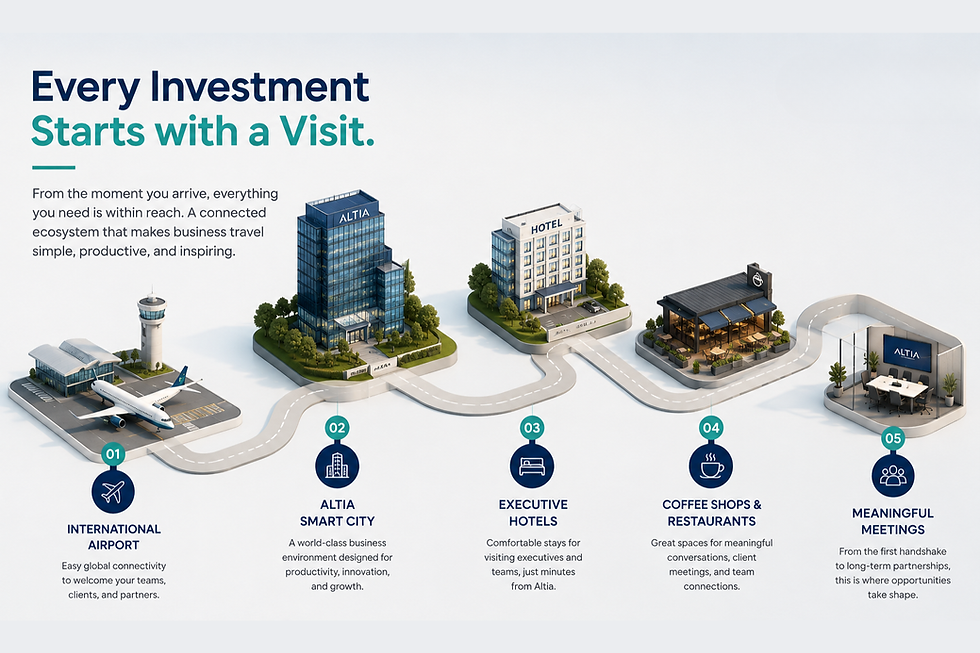
Altia Smart City: Where the Advantage Becomes Scalable
Talent and language matter — but environment matters too.
Altia Smart City was designed to support:
Nearshoring operations
Business continuity
Long-term investment
Sustainable growth
Companies operating inside Altia benefit from:
Access to bilingual talent
Purpose-built infrastructure
Operational stability
A professional ecosystem designed for scale
This reduces risk and accelerates performance from day one.
Final Thought: A New Nearshoring Perspective Honduras Ranks #2 in Latin America for English Proficiency
Traditional nearshore destinations will continue to play an important role in Latin America.
But the market no longer needs to choose between:
Low cost or good English
Scale or quality
Honduras proves that both can exist in the same place.
With its #2 ranking in English proficiency in Latin America, strong cost efficiency, and smart ecosystems like Altia Smart City, Honduras is not replacing traditional markets — it is raising the standard.
In 2026, nearshoring is no longer about managing trade-offs.
It is about choosing balance.
And Honduras is ready. 🇭🇳💙